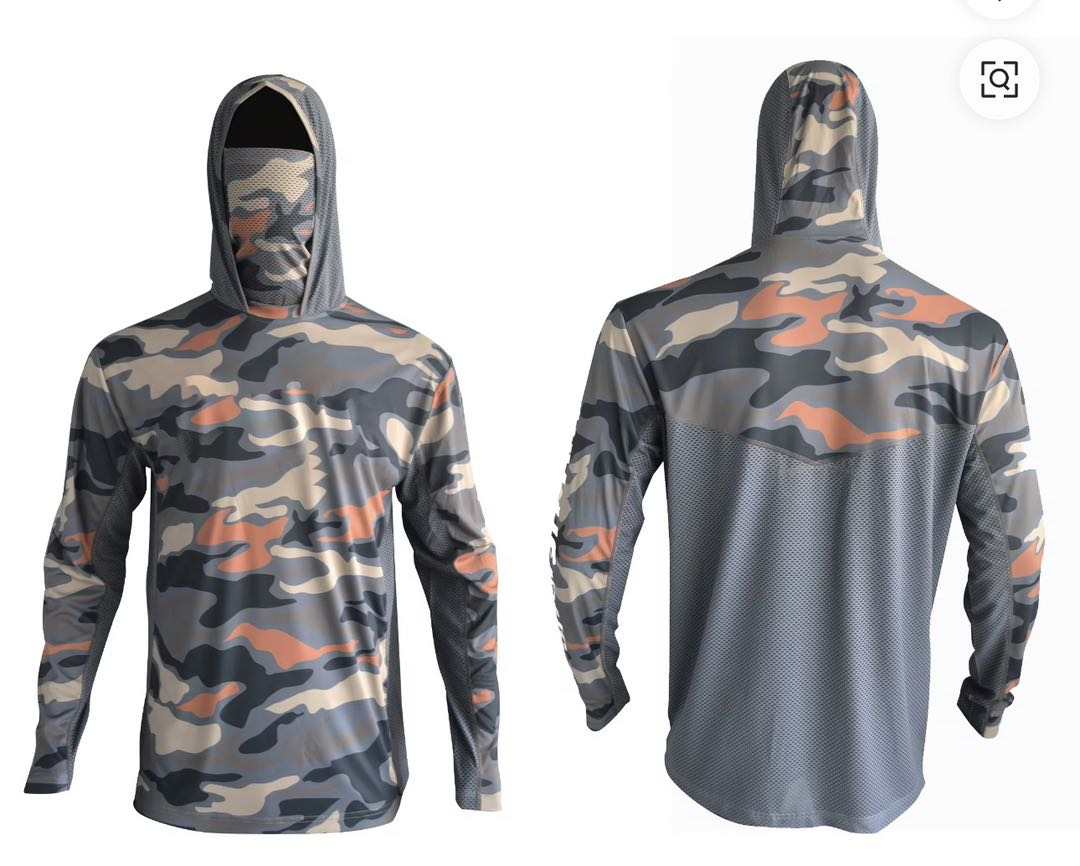

Fishing apparel is a perennial high-demand category in European, American, Australian and Southeast Asian outdoor foreign trade markets. Different from ordinary quick-dry clothes, it belongs to professional functional outdoor apparel. Overseas buyers have fixed inspection standards for UV protection value, sweat-wicking efficiency, wear resistance and tailoring details. It is also a category prone to rework and rejection due to substandard parameters. Many new foreign trade practitioners treat fishing shirts as ordinary quick-dry tops, resulting in after-sales losses caused by missing functional certifications and defective craftsmanship.
Genuine export fishing shirts rarely adopt pure cotton fabric, which absorbs water heavily, dries slowly and fades easily under strong sunlight, failing to meet outdoor fishing needs. There are two mainstream foreign trade fabrics at present. The first is high-density polyester and recycled rPET fabric, the mainstream material for European and American supermarket and brand orders. With a weight of 130–160g, it features tight fiber structure, strong UV resistance and stable UPF50+ sun protection, supporting efficient moisture wicking and quick drying. The second is nylon blended fabric with higher toughness, tear and wear resistance, suitable for high-end customized outdoor orders. It is ultra-light and skin-friendly. A small amount of spandex is added to achieve 4-way stretch, adapting to large fishing movements. Environmentally friendly orders prefer GRS-certified recycled polyester to comply with European and American sustainable consumption policies.